I observe from Reunion Island, 21 degrees south of the equator. And every time I read an article on "the best targets for a smart telescope", it's the same thing: M31, M42, M51... Magnificent objects, but chosen for the northern hemisphere sky.
Yet in the tropics and further south, the sky offers wonders you never see from Europe: Carina, Omega Centauri, the Magellanic Clouds. This article is for you if you live in the southern hemisphere (Australia, New Zealand, South Africa, South America, the Indian Ocean islands...) or if you're travelling there with your smart telescope.
How to read this list
For each target, I give:
- its maximum altitude from Reunion Island, meaning the angle above the horizon when it's at its highest. The higher, the less atmosphere you look through, and the sharper the image;
- the best season, when the target is at its highest early in the evening, around 10 pm;
- the framing with three common smart telescopes (Seestar S50, Dwarf 3 and Seestar S30 Pro), computed with the site's field of view calculator.
Live somewhere else? A target's maximum altitude is easy to work out: 90 minus the gap between your latitude and the object's declination (its "latitude" in the sky). The calculator does the rest.
1. The Carina Nebula (NGC 3372)
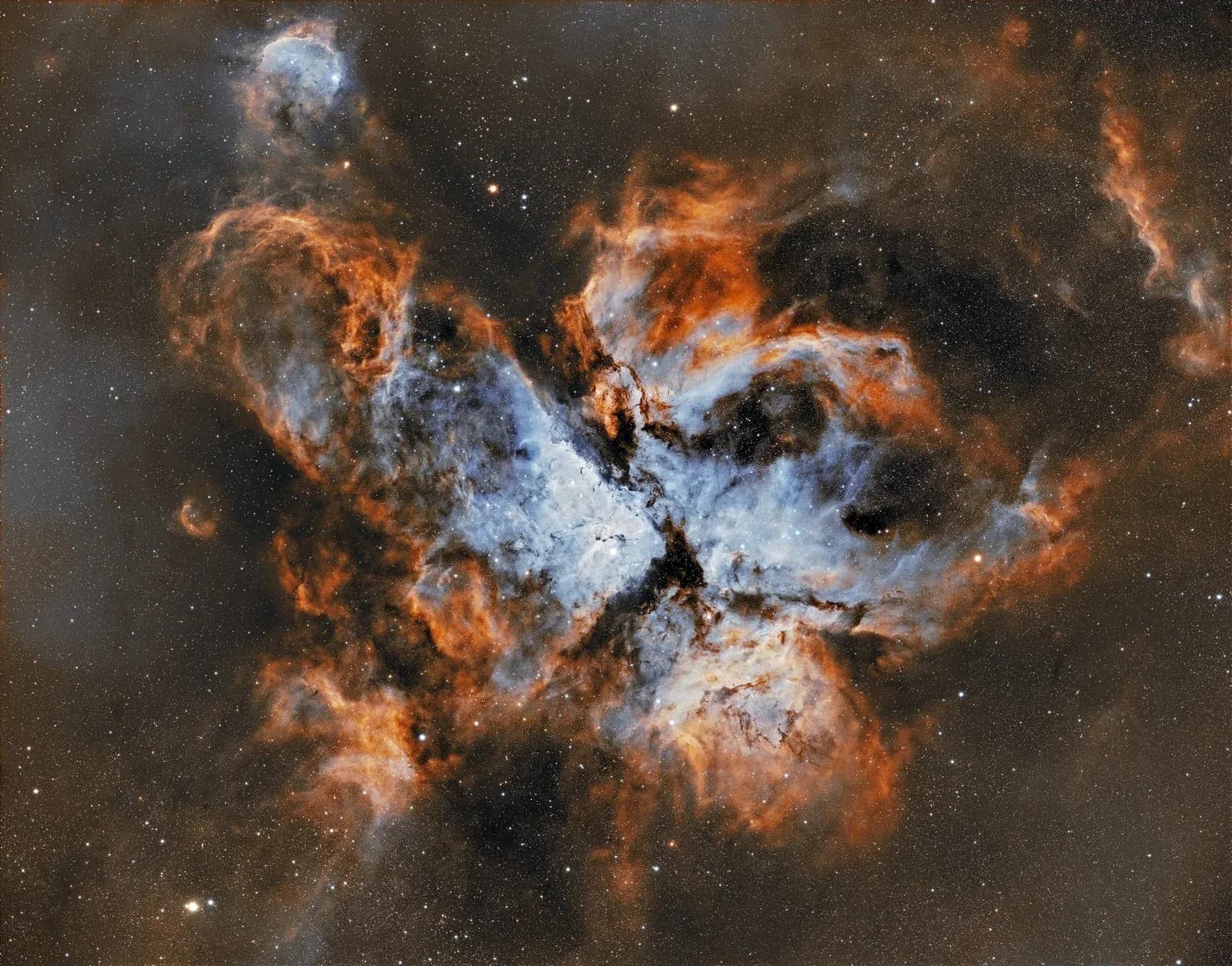
To me, the most beautiful nebula in the sky. Huge, bright, full of detail, with Eta Carinae at its heart, one of the most massive stars known.
- Constellation: Carina
- Size: about 2 degrees, four times the full Moon
- Maximum altitude from Reunion Island: 51°
- Best season: February to May
- Never rises from Paris
Its size is its only drawback for a smart telescope:
The Seestar S30 Pro frames it whole, the Dwarf 3 almost. With the Seestar S50, you focus on the central part, already spectacular, or go for a mosaic.
2. Omega Centauri (NGC 5139)
The largest and brightest globular cluster in the sky: a ball of several million stars. Visible to the naked eye under a good sky, it's fascinating through a telescope.
- Constellation: Centaurus
- Size: 36′, larger than the full Moon
- Maximum altitude from Reunion Island: 64°
- Best season: April to June
- Never rises from Paris
It fits in every smart telescope. The Seestar S50, with its longer focal length, shows it biggest, and that's an advantage here: individual stars are easier to make out. I have to admit that I'm not a huge fan of globular clusters, but for anybody who likes them, it's a really wonderful object.
3. Centaurus A (NGC 5128)
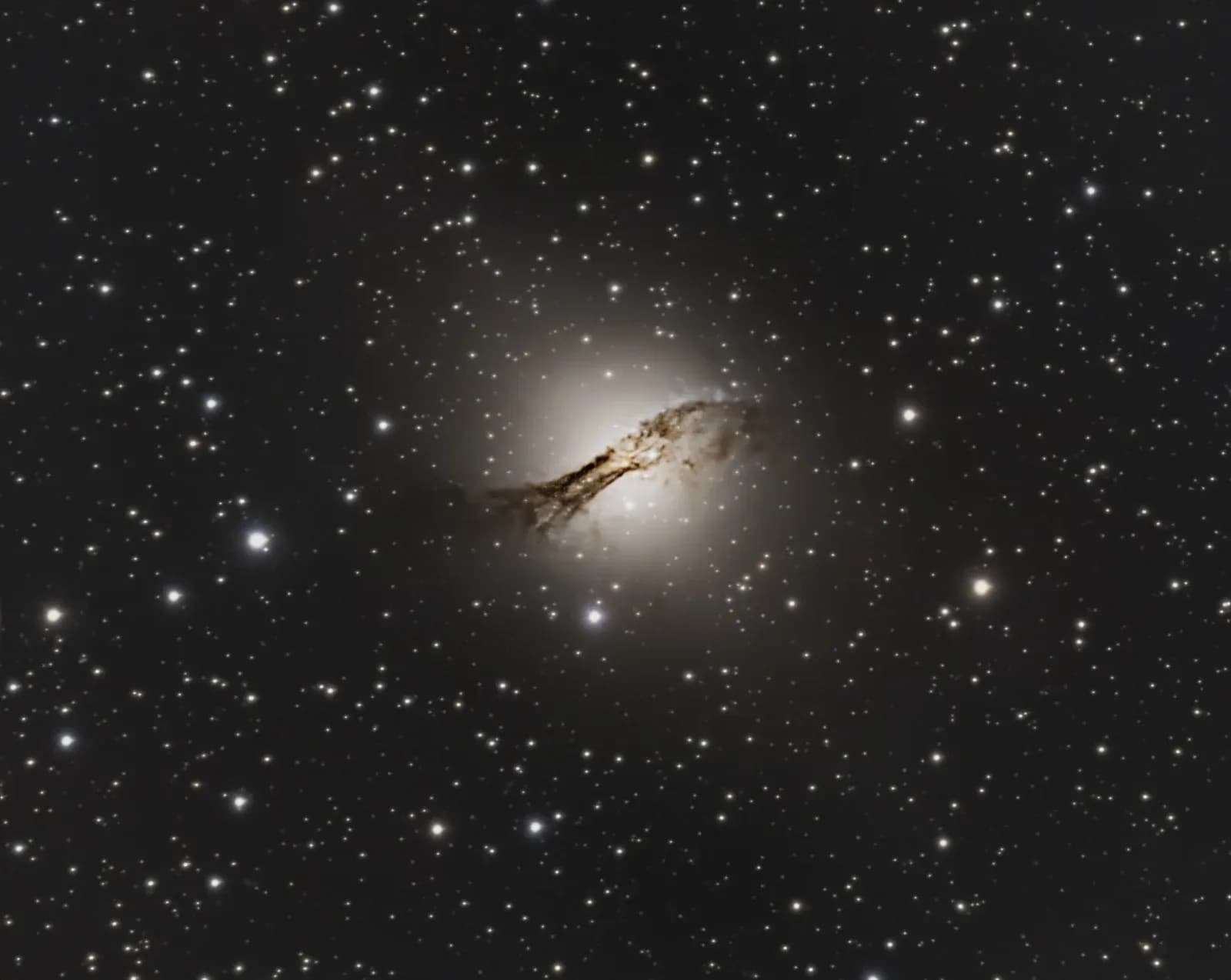
A strange-looking galaxy crossed by a thick band of dark dust. It's actually the result of two galaxies merging.
- Constellation: Centaurus
- Size: 26′ × 20′
- Maximum altitude from Reunion Island: 68°
- Best season: April to June
- Practically invisible from Paris, right on the horizon
It fits easily in every model. The Seestar S50 shows it biggest, and that's my image above.
4. The Dragons of Ara (NGC 6188)
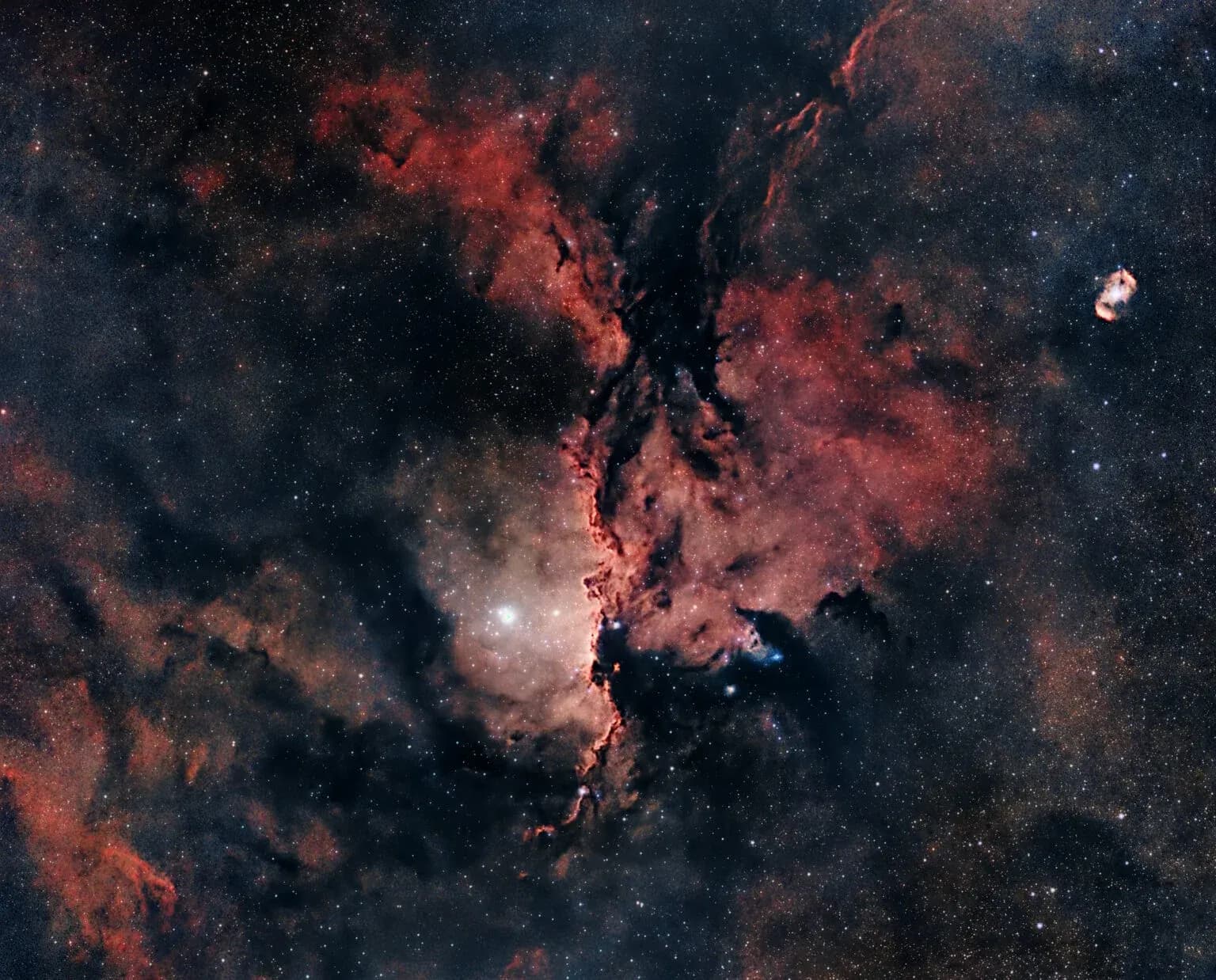
A nebula sculpted by the wind of nearby stars, where you can make out two dragons facing off. It takes exposure time, but the result is worth it.
- Constellation: Ara
- Size: 20′ × 12′
- Maximum altitude from Reunion Island: 63°
- Best season: May to August
- Never rises from Paris
The Dragons of Ara fit in every smart telescope, and the S50 shows them biggest. Plan several hours of exposure: my image adds up to more than 11.
5. The Prawn Nebula (IC 4628)
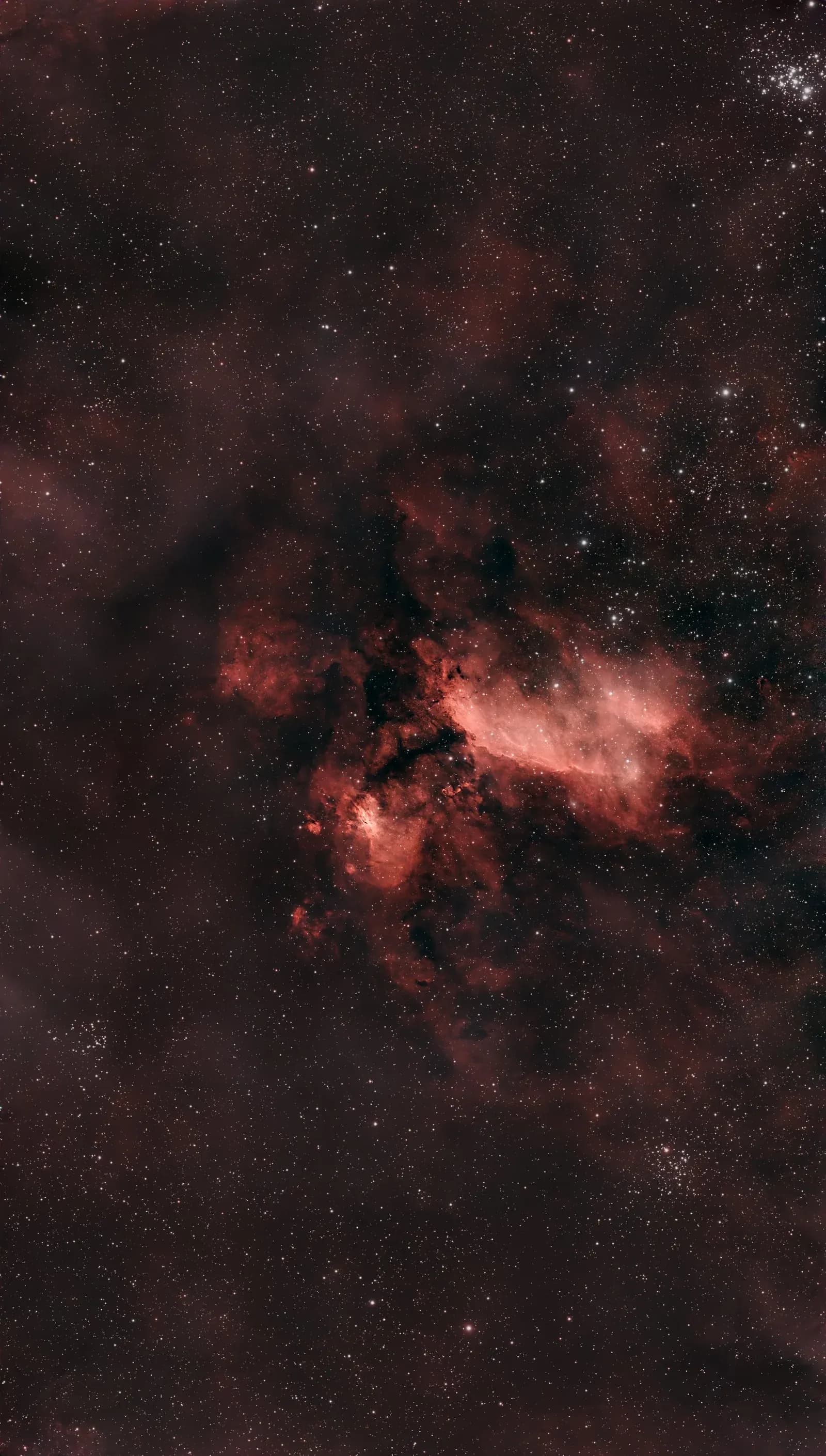
A large red hydrogen nebula near the tail of Scorpius, shaped like a prawn.
- Constellation: Scorpius
- Size: about 1.5 degrees
- Maximum altitude from Reunion Island: 71°
- Best season: June to August
- Right on the horizon from Paris, so out of reach in practice
It just fits in the Dwarf 3, comfortably in the Seestar S30 Pro. With the Seestar S50, you need a mosaic.
6. The Running Chicken Nebula (IC 2944)
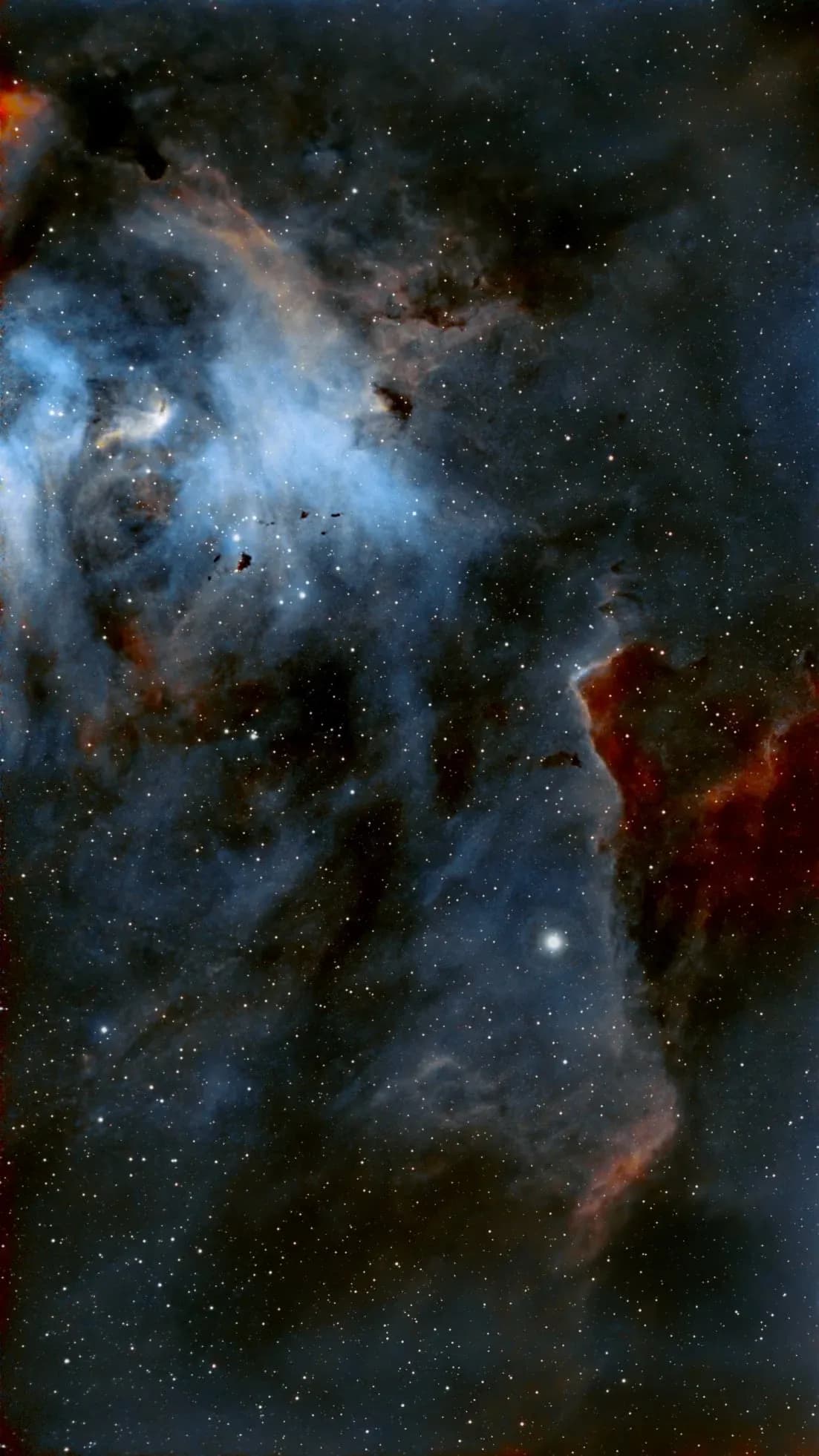
A nebula with an amusing name, dotted with small dark clouds called Thackeray's globules.
- Constellation: Centaurus
- Size: about 1.25 degrees
- Maximum altitude from Reunion Island: 48°
- Best season: March to May
- Never rises from Paris
It fits in the Dwarf 3 and the Seestar S30 Pro. With the Seestar S50, you frame its central part, or make a two-panel mosaic.
7. The Tarantula Nebula (NGC 2070)
The most active star-forming region in our galactic neighbourhood, inside the Large Magellanic Cloud, about 160,000 light-years away.
- Constellation: Dorado
- Size: 40′ × 25′
- Maximum altitude from Reunion Island: 42°
- Best season: December to February
- Never rises from Paris
It fits in every model, and the Seestar S50 shows it biggest.
8. The Large Magellanic Cloud (LMC)
A whole galaxy, a satellite of ours, visible to the naked eye as a small cloud detached from the Milky Way.
- Constellation: Dorado
- Size: over 10 degrees, about twenty full Moons
- Maximum altitude from Reunion Island: 41°
- Best season: December to February
- Never rises from Paris
Too big for any smart telescope in one image: it's a mosaic subject, or one for a simple camera on a tripod. With a smart telescope, you rather explore its richest regions, like the Tarantula.
9. 47 Tucanae (NGC 104)
The second finest globular cluster in the sky, right next to the Small Magellanic Cloud.
- Constellation: Tucana
- Size: 44′
- Maximum altitude from Reunion Island: 39°
- Best season: September to December
- Never rises from Paris
It fits in the Dwarf 3 and the Seestar S30 Pro, and only just in the Seestar S50.
10. The Small Magellanic Cloud (SMC)
The Large Cloud's companion, smaller but just as impressive.
- Constellation: Tucana
- Size: about 5 × 3 degrees
- Maximum altitude from Reunion Island: 38°
- Best season: September to December
- Never rises from Paris
Like its big brother, it calls for a mosaic, except with the Seestar S30 Pro, which takes in a large part of it in one go.
Which smart telescope for the southern sky?
The large southern nebulae (Carina, Prawn, Running Chicken) favour wide-field models like the Dwarf 3 or the Seestar S30 Pro. Globular clusters and galaxies (Omega Centauri, Centaurus A, the Dragons of Ara) are more at ease with the Seestar S50's longer focal length.
To go further, I've compared the Seestar S50 and the Dwarf 3 in detail, and every current model is in the comparison.
One last tip
Several of these targets stay fairly low, especially from tropical regions. Pick a spot with a clear view to the south, and shoot them when they're at their highest: the image will be all the sharper. And feel free to try your own targets in the field of view calculator, which offers more than fifty, including these ten.
Frequently asked questions
Why can't these objects be seen from Europe?
Because they're too far south in the sky. From Paris, they stay below the horizon all year round. You need to head towards the tropics to see them rise.
Can I photograph the southern sky with a smart telescope?
Yes, with no difficulty. Smart telescopes work anywhere: they find their way on their own by recognising the stars. All you need is a clear view to the south.
What's the best southern target to start with?
Omega Centauri: very bright, easy to find, and beautiful even with little exposure time.